Marketing and lead generation are not the same.
When accountants come to my agency to ask for help with “marketing”, half the time they are asking for new leads, new business, more clients. The other half of the time they want marketing resources – a new brand, an updated website, assets such as PDF guides and videos and blog posts and social posts.
The two work together, absolutely. And we’ve been writing case studies recently on how we help our clients get leads in the long run. (The right way is the long way, always.) The most recent one spans 7 years and involves an increase in monthly recurring revenue of 40%. Another one we’re working on now involves an accountant getting 6 leads in 2 months, 3 of which turned into business leading to over $30k of new work.
But how marketing leads to sales always, ALWAYS, involves the human connection.
It involves relationships. Talking to people. Connecting with people like humans.
This is even more true lately, because we’re all a little disillusioned and weary of AI generated marketing. Tired of those crowded, dark, messy flyers that don’t really say anything. Tired of LinkedIn dm’s that were pre-written and pre-scheduled, and try to push us into a 15 minute zoom call with a stranger.
Connection is the key. And when I hear from our clients about how they are getting leads, not just creating marketing materials, there are 3 things which will work. (Alongside having a good brand, website, assets, social media presence, and so on. The two have to work together.)
These three are:
EVENTS: Higher cost, quicker return
Sponsoring or exhibiting at an event can feel like an easy win. Sure, it’s a big hit on cash: events can cost 10k, 20k, or even 30k for the sponsorship fee alone – much less the marketing materials, travel, and your and the team’s time.
But just think of the wins! And you do. You fondly imagine getting a banner printed, standing behind a table, and having flocks of new prospects hurrying over to sign up for retainers that day.
That’s simplifying things massively, but it’s true that events are one of the quickest ways to get leads – if you are at the right event with the right materials. Here’s what to consider:
Do you know anything about the event? Have you been to it? – Just because it’s nearby, or purports to have thousands of your ideal clients, or the salesperson told you it would be perfect, doesn’t mean it will be. My suggestion for exhibiting or sponsoring is, if at all possible, just go to the event. Send a team member. Wander around and gauge the attendance, the energy, the other speakers. Sure, it means you’ll skip this year’s event and maybe exhibit next year: but it could save you $20k to discover that the “3000 ecommerce businesses” is actually 3000 registered attendees for a free event, and 500 showed up over a one day period, of which 400 spent the full day in talks, leaving 100 to wander by your stand, of which 90 were new start ups. A little prep goes a long way.
What are the real costs – all of them? Surprisingly, as accountants you sometimes skip the true accounting work when evaluating event costs. “It’s only $1500 for a table!” you say. “All we need is one new client and we’ll make our money back in two months!” But you need to consider all of the costs: the creating of the marketing materials (banners, stand design, postcards, handouts, leaflets, swag). The printing of those materials. Your time. The team’s time (usually you need at least 1-2 other team members there with you). The travel and accommodation for you and the team. The lost time from not being at the office. The lost time once you get back catching up on both client work and event follow up. It’s a lot. A two-day event could go from “only $1500” to about ten grand, all in.
The first event often has the least return – Our clients regularly find that when they’ve been at an event year after year, the impact builds. I was talking with an accountant who specialises in adult care homes, and there’s an event he goes to every year, and spends “only $800” (see point above) for a table. The first year he got one client. The second year, another one. The third year, two or three. This year, four years in, he had signed $12k worth of work before the event was even over, and he had about 15 people to follow up with afterwards. We’ve had the same thing at PF. There was one event we sponsored for over seven years in a row, and by the fourth or fifth year we were winning nearly $150k of new business from one event alone. If you find the right event, it can be really profitable: because events rely on relationship and trust. When you go every year to the right place with the right people, they start talking to each other. They remember who you are and decide to work with you after all. They have a good experience and stay. Stick with it over the long term. The right way is the long way, too.
Follow up is 90% of the game – If you do all the prep work, show up, have amazing conversations with people, get leads, take pictures, and feel amazing about your marketing efforts…the work has just started. Just a few of the things you need to do afterwards are:
- Send a series of follow up emails – some directly asking if they want to book a call or get a quote, some just giving them free helpful resources
- Connect with them on social (like LinkedIn) – simply sending a LinkedIn connection request can go a long way to getting that personal connection and a conversation, even if they don’t think they’re ready to buy or to switch accountants yet. Comment on their posts (in a helpful non creepy way), and pay attention to what matters to them.
- Stay in touch until they say no – Don’t give up. Even if it takes you a year, keep sending helpful resources, commenting on posts, showing your expertise. After all, that might lead to business in the second year of that event.
I realise I’ve just said that events may be a high cost and can get you a quick return, and then i’ve spent time saying you need to prep, and follow up, and it takes time. But when the right pieces come together, it really does feel like magic. Spent $10k, got $30k in two weeks’ time. The literal dream!
NETWORKING: Find the right ones for you
Networking sort of fell out of favour for a while – maybe in 2020 when we all stopped going to events for a while, or maybe because we convinced ourselves that we didn’t need to do it anymore.
After all, digital is the way. We’d just post on LinkedIn now and then, send some emails, maybe do some ads. Who needs to actually drive to a breakfast event, stand around talking to people for two hours (half of which aren’t your ideal clients), drive back, and have lost a morning for nothing?
But like sponsoring events, networking can be extremely positive when done well. A few of the ways you can network well include:
- Find the right networking events for you. If you work with nonprofits, where are the gatherings for people who work in nonprofit organisations? If you work with creative agencies, are there any creative events you can attend, or get an invite to? When you’re in the room with the right people, networking works a lot faster.
- Have an asset to hand out or send later. Something that is free, and is enormously helpful to your ideal audience. One of our clients created a “clarity review” for the owners of therapy group practices, highlighting the top 7 financial problems these practice owners usually face. Within two months of putting it on her site, she had 6 genuine leads, of which 3 turned into clients, resulting in $30k worth of new work so far.
- Listen more than you talk. Ask good questions. Really, genuinely seek to understand what their issue is. If you do, you’ll either discover their issue fits your solution; or, you’ll discover maybe you’re not the best fit for them right now, and you won’t waste your time trying to sell to someone who’s not ready or doesn’t need your services.
- Follow up, follow up, follow up. See the events point above. Do not send two emails and then figure “oh well if they were interested they’d get in touch”.
- LinkedIn counts as networking. LinkedIn is literally the world’s biggest networking event: you’re simply looking for the room with your people in it. Share posts about the things they care about. Connect with those people, and their friends and clients. Share articles and podcasts and videos for those people. Follow them and engage with their posts. That’s networking, too. (But make sure that 30% or less of your connections are accountants, otherwise you’re just using it as a chance for peer connections, not lead generation.)
REFERRALS: Have an actual strategy (don’t just wait)
And finally, our all time favourite: referrals. A client or a strategic partner says “These are the people to work with”, the person reaches out, you have a call, they sign up.
Easiest lead gen in the world, right?
Once again, it’s not magic. Just because it feels (and often is) fast and effective doesn’t mean that the process to get the person to you was fast too. Have an actual plan, an approach, to connect with people who need your help but aren’t connected to you yet. This can include:
- Create a referral one pager. “This is who to refer to us”. Rather than “do you know anyone who needs our help”, ask “Do you know any owners of dental practices who want to buy another practice?” Your chances of someone thinking of a good connection will be much higher.
- Tell them how to send them to you. Of course they can do the old classic of emailing you and copying in the referred person. But you could have a discovery form, or a website page, or a helpful asset that you provide to them to send. “If someone is interested, send them this.”
- Offer to be on podcasts. Find people who are experts in the same area, the same industry perhaps (of your ideal clients) who need someone to talk finances to their clients and contacts. You’ll get to share what feels like very normal information you say every day: and they’ll be hanging on your every word and amazed at how simple you made something they found complex or worrying. And have an asset to share (see the networking point, above.)
- FOLLOW UP. FOR THE LOVE OF ALL THINGS, KEEP FOLLOWING UP. Hopefully you’re getting this point by now. No matter where the lead comes from – an event, a networking connection, a referral – do not presume that because you haven’t heard back they don’t care. People are busy. People forget. And after all, if you become their accountant you’re going to be sending them reminders for things from time to time as well – tax information, receipts, input. Start strong in the sales process and don’t leave the responsibility on them. You take the sales responsibility and lead with it until they say no, or become a client.
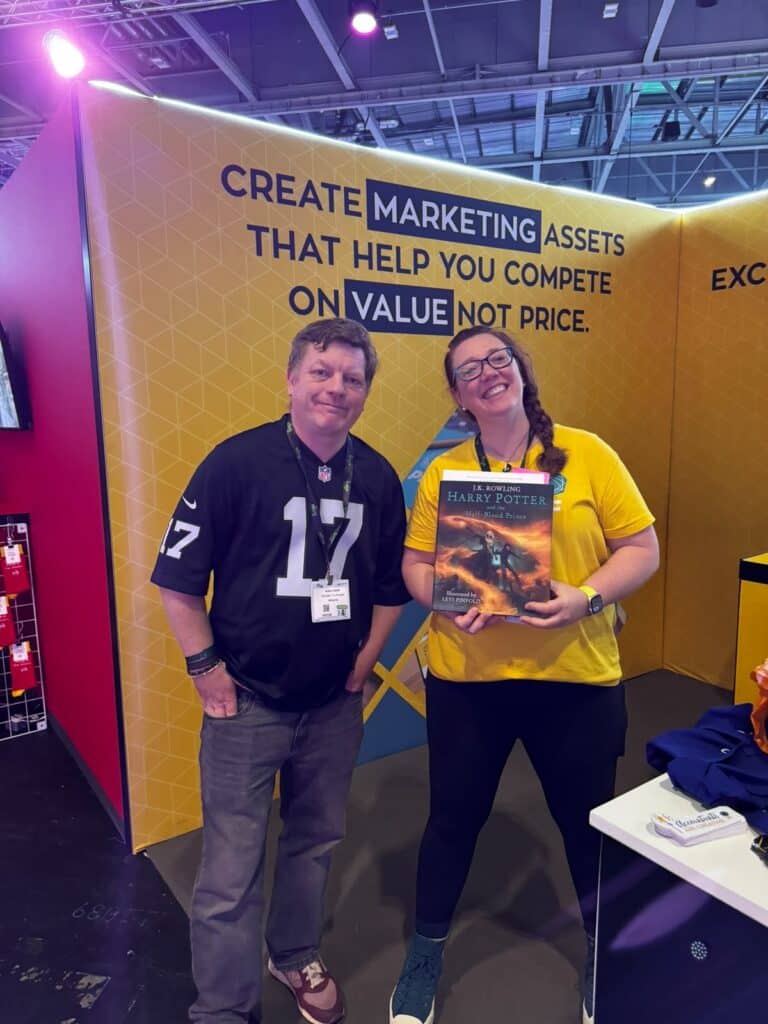
P.S. This photo is of me with someone I’ve met many times at an event, and who – in a marvellous twist of perfect timing – had been invited to the launch of the new illustrated version of one of the Harry Potter books in London. He remembered that I am a HP fan so he got me a signed copy, and a print from one of the illustrations, and brought it to me at the accounting event we were both at. Sometimes connections bring you more than just new business. They bring you a little joy in life, too.